Two cars from the same group, sharing a showroom, can look entirely different and drive almost identically. The explanation is not cynical cost-cutting, although it is often described that way. It is that both cars are built on the same platform, and a platform fixes more of the driving experience than any styling decision.
Understanding platforms explains a great deal about the industry: why certain sizes of car exist, why some brands cannot build a particular shape, and why two competitors sometimes seem to launch the same vehicle in different clothes.
What a platform actually is
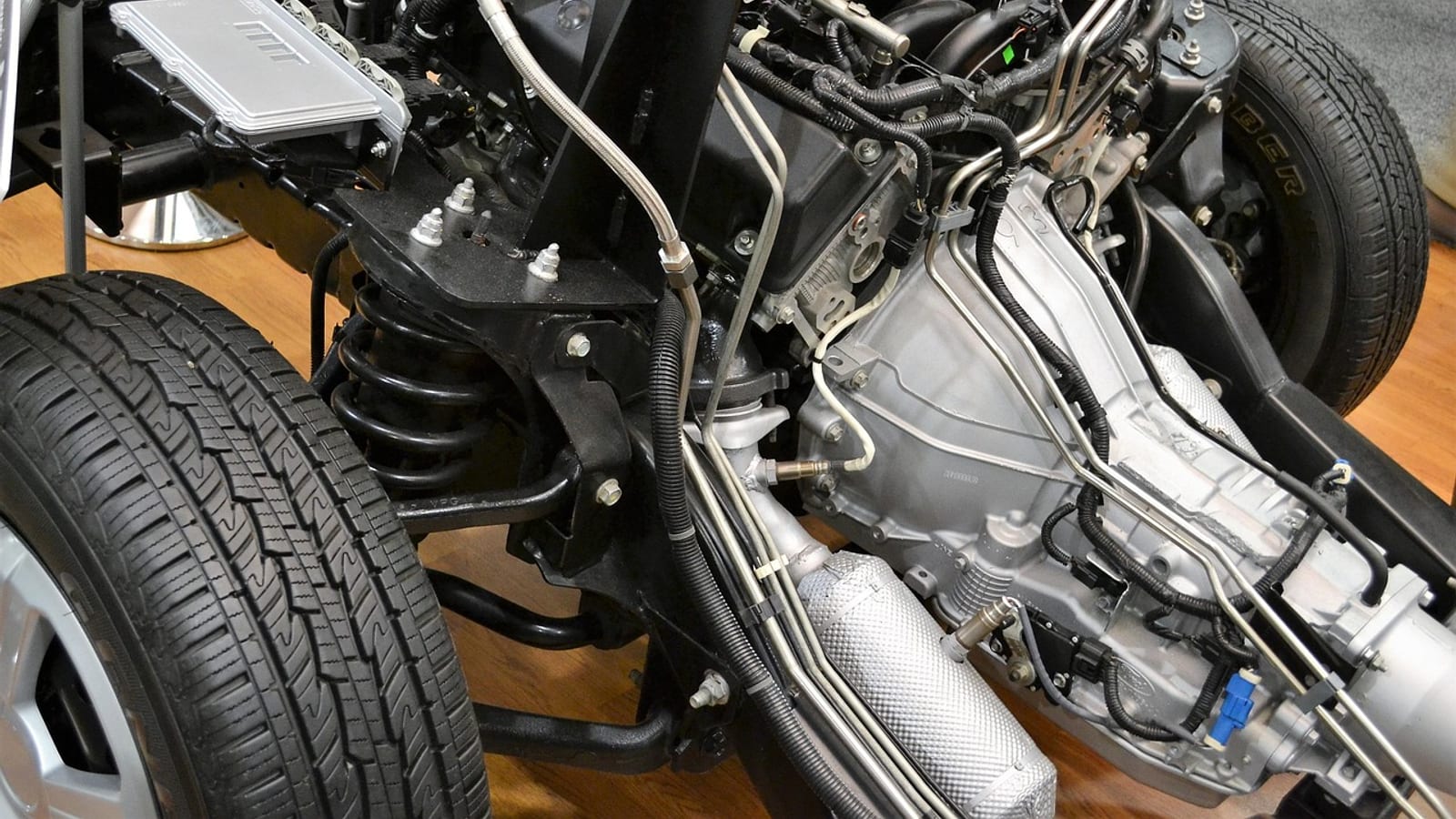
A platform is the set of engineering decisions that are expensive or impossible to change per model: the floor structure, the suspension pickup points, the crash load paths, the powertrain mounting strategy, the electrical and electronic architecture, and the manufacturing process assumptions that go with them.
Designers work on top of those fixed points. They can change the body panels, the greenhouse, the interior, the trim, and the calibration. They cannot easily change the wheelbase by 200 millimetres, because that would move the hard points and require a new structure.
This is why the same platform can produce a hatchback, a sedan, and a small SUV that feel related in the ways that are hard to fake — ride frequency, steering geometry, structural stiffness — while looking unrelated.
The economics are brutal and simple
Developing a new platform costs a great deal of money: engineering, validation, tooling, and the plant investment to build it. That cost has to be recovered across every vehicle that uses it.
Spread it across one model at 80,000 units a year and the per-unit burden is punishing. Spread it across six models at 400,000 units a year and it becomes a line item. This single fact explains most platform strategy in the industry.
It also explains why platform sharing is not a shortcut for lazy companies. It is the mechanism that makes a mid-priced car possible at all. The alternative — a bespoke platform per model — is how you get a car that is excellent and unaffordable.
Badge engineering is not a failure of imagination. It is a failure of differentiation on top of a platform that had to be shared to exist.
Advertisement
Where differentiation actually happens
Given a shared platform, brands differentiate in four places: the body and greenhouse, the interior, the chassis calibration, and the powertrain or power output.
The most effective differentiation is calibration. Damping, steering weight, throttle response, and noise isolation can change a car’s character substantially without changing a single hard point. It is also cheap relative to new tooling, which is why it is where most of the effort goes.
The least effective differentiation is trim. A different grille and a different badge on an identical structure is the version of platform sharing that customers notice and resent.
What electric platforms changed
Electric platforms loosened one constraint and tightened another.
The loosened constraint is packaging. Without an engine, a transmission tunnel, and a fuel tank, the floor can be flat, the wheelbase can be stretched without proportion penalties, and the cabin can be pushed forward. Designers have more freedom in proportion than they have had in fifty years, which is why so many electric cars share a similar silhouette: a long wheelbase, a short bonnet, and a high beltline.
The tightened constraint is cost. The battery pack is the most expensive single component in the car, and it is shared across models because designing a new one is prohibitive. That makes pack chemistry, cell format, and voltage architecture platform-level decisions — the things a brand genuinely cannot change per model.
It also creates a new kind of convergence. When every brand buys cells from a handful of suppliers and adopts similar pack formats, the differences that remain are in thermal management, charging behaviour, and software. Those are real differences, but they are less visible on a spec sheet than a body shape.
Advertisement
Why some cars cannot exist
Platform logic explains absences. A brand with no rear-wheel-drive platform cannot build a rear-drive sports sedan without a bespoke program. A brand whose smallest platform is a compact crossover cannot profitably build a city car.
This is the honest answer to a lot of “why doesn’t anyone build X” questions. The car may be desirable, the segment may exist, and the economics may still fail because there is no platform to build it on.
What to look for
If you want to know whether two cars are related, compare wheelbase, track, and kerb weight, then look at the suspension layout and the electrical architecture. Styling is the least reliable signal and the one the marketing leads with.
If you want to know whether a future model is plausible, ask which platform it would sit on and which plant would build it. Those two answers constrain the product more tightly than any design sketch.
Platforms are the industry’s real product strategy. Everything else — the badges, the ads, the launch events — happens on top of decisions that were made years earlier, by engineers, about where the wheels attach.