Ask where the money goes in a new vehicle and most people picture engineering, or batteries, or advertising. The largest single block that is not the powertrain is usually tooling: the dies, moulds, fixtures and gauges that turn a design into parts at a rate of one car a minute.
Tooling is the reason vehicle programs behave the way they do. It explains why designs freeze so early, why facelifts are so surgically targeted, and why a company will happily spend years arguing about a 5-millimetre change in a shoulder line before production, then never touch it again.
A car is a set of tools with a vehicle attached
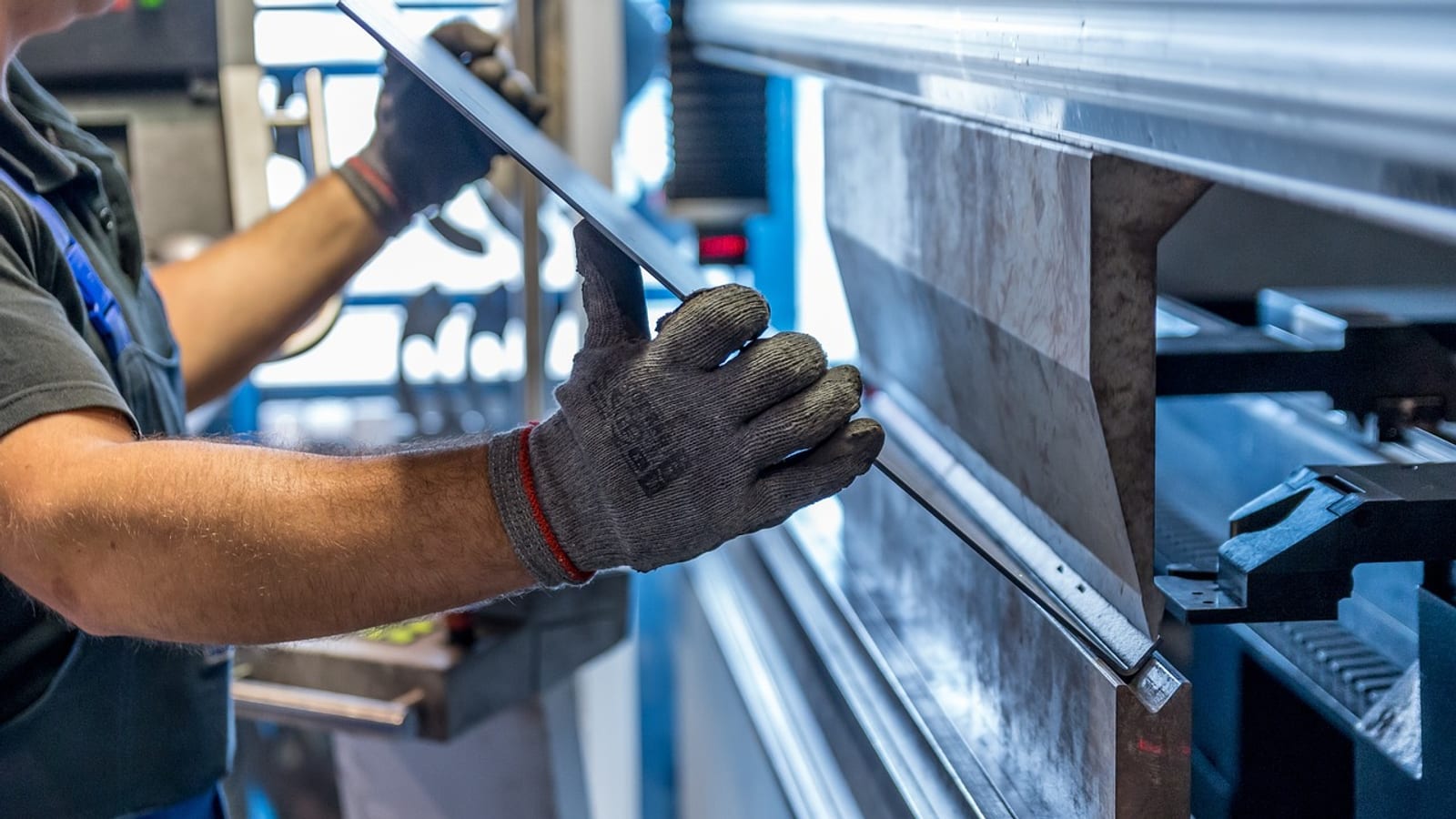
Every major body panel starts as a flat sheet of steel or aluminium and ends as a shape. Getting from one to the other takes a press line and a set of dies: a draw die that forms the basic shape, then trim, pierce, flange and restrike tools that cut the edges, punch the holes, and set the final geometry.
A single large panel can need several dies, run in sequence, each one a machined block of tool steel weighing many tonnes. Multiply by the panels in a body — doors, wings, bonnet, tailgate, roof, sills, structural members — and the count runs into the dozens.
None of it is reusable. A die is cut to one shape. Change the shape and you either recut the tool or make a new one, and both are expensive in a way that makes engineers very conservative about late changes.
Tooling does not care how good the idea is. It only knows the shape it was cut for.
The moulds are the other half
Body panels get the attention, but the interior and exterior trim consume their own fortune in injection moulds.
An instrument panel is a large, complex part with Class A surfaces, mounting bosses, airbag chutes, and a wall thickness that has to fill reliably in a single shot. Its mould is among the most expensive single tools in the program, and it locks the shape of a part that will be produced for the life of the vehicle.
Bumpers, grilles, lamp housings, door trims, and console parts follow the same logic at smaller scale. Each is a tool with a lead time measured in months, a tryout period, and a set of dimensional checks against the body it has to fit.
Advertisement
Tryout is the schedule risk nobody plans for
Here is the part that surprises people outside the industry: cutting the die is not the hard part. Making it produce a part that fits is.
Dies are tried out in a press, iteratively. The first parts spring back, wrinkle, tear, or fail to fill. Toolmakers spot the die in — grinding and adjusting surfaces by hand — until the panel meets its dimensional spec, its surface quality spec, and its production rate. That process is skilled, physical and difficult to compress.
This is why tooling sits on the critical path even when the design is finished. A program can be late because a die is late, and no amount of design review fixes a press that is producing scrap.
Why facelifts stop at the A-pillar
The economics of tooling explain one of the most predictable patterns in the industry: the mid-cycle update.
A facelift typically replaces the front and rear fascias, the lamp graphics, the grille, and much of the interior. It almost never replaces the doors, the roof, or the rear quarters. Those panels have dies that were paid for at launch, and the only reason to cut new ones is a change in the underlying architecture — which is a new vehicle, not an update.
So the visual language of a facelift is loud where tooling is cheap and quiet where tooling is expensive. New bumper and lamp moulds are a manageable line item. New door dies are not.
Advertisement
What electrification changed
Battery-electric programs shift the tooling mix rather than removing it.
A flat-floor body has fewer large pressings in some areas and more in others, and the structural members that protect the pack are substantial. Battery packs themselves need assembly lines, fixtures, and end-of-line test equipment that a combustion powertrain line did not.
At the same time, electric platforms have fewer powertrain variants to tool for — no engine family, no exhaust routing, no multi-speed transmission — which frees budget for the body and the pack. The total does not fall. It moves.
Why this matters to a buyer or a reader
Three practical consequences.
First, when a manufacturer says a car is “all-new”, the interesting question is not whether the panels changed but whether the tools did. New dies mean a new body. New fascias only mean a new bumper mould.
Second, a late design change is not a trivial request. It is a decision to delay a program or to spend money that was allocated elsewhere, which is why public pressure rarely changes a shape.
Third, the timing of a facelift is largely a tooling decision. The update arrives when the model needs a demand boost and the budget allows, not when the engineering is ready.
Tooling is the least photographed part of the car business and the most determinative. It is why a design becomes expensive the moment it stops being a drawing, and why the cars we get are, in a literal sense, the ones somebody was willing to cut steel for.