Press the brake pedal in an electric car and you are not necessarily asking for the brakes. You are asking for a rate of slowing, and the car decides how much of that rate to take from the motor and how much from the friction pads.
The pedal asks for deceleration, not for friction
An electric motor and a generator are the same machine run in different directions. Press the pedal, or simply lift off in a car set up that way, and the wheels drive the motor instead of the motor driving the wheels. It becomes a generator: the current it produces flows into the pack, and the drag that creates is real torque opposing the car’s motion.
The motor can only do so much. Regenerative braking is limited by how much torque the motor can make at the speed it happens to be turning, and by how much charge the pack will accept at that moment. Both limits move constantly as the car slows and as the pack warms, fills or cools.
Regen fades at both edges of the envelope
At very low speed the motor turns too slowly to generate useful power, and the car is running out of kinetic energy to recover anyway. Under hard braking, the pack’s appetite for charge becomes the binding constraint, and a pack that is cold or nearly full has very little of it.
So the friction brakes take over at the edges: the last metres before a stop, and the emergency stop that no regen map will cover. This is not a fallback that a better motor would remove. It follows from the physics of a generator whose output falls with speed, and from a battery that cannot absorb unlimited current without damage.
Advertisement
Blending is a controls problem you feel in your foot
Between those edges, most of the time, the car is blending. The pedal has to mean a single, predictable rate of deceleration while the split between motor and friction shifts underneath it, sometimes several times a second as speed falls and charge acceptance changes.
Do that badly and the pedal develops a step in it: the car surges slightly as regen drops out near walking pace, or the brake bites harder than the pressure you applied. None of that is a hardware limitation. It is calibration, meaning how the engineers choose to arbitrate between two sources of stopping force and how honest they make the pedal about which one is working.
The friction brakes never leave. They wait at the edges, where the motor runs out of speed or the pack runs out of appetite.
That arbitration is also where the character of an electric car is decided. The same motors, the same packs and the same calipers can produce two cars that feel entirely different to drive, because the maps and the priorities behind them differ.
Brakes that never work start to corrode
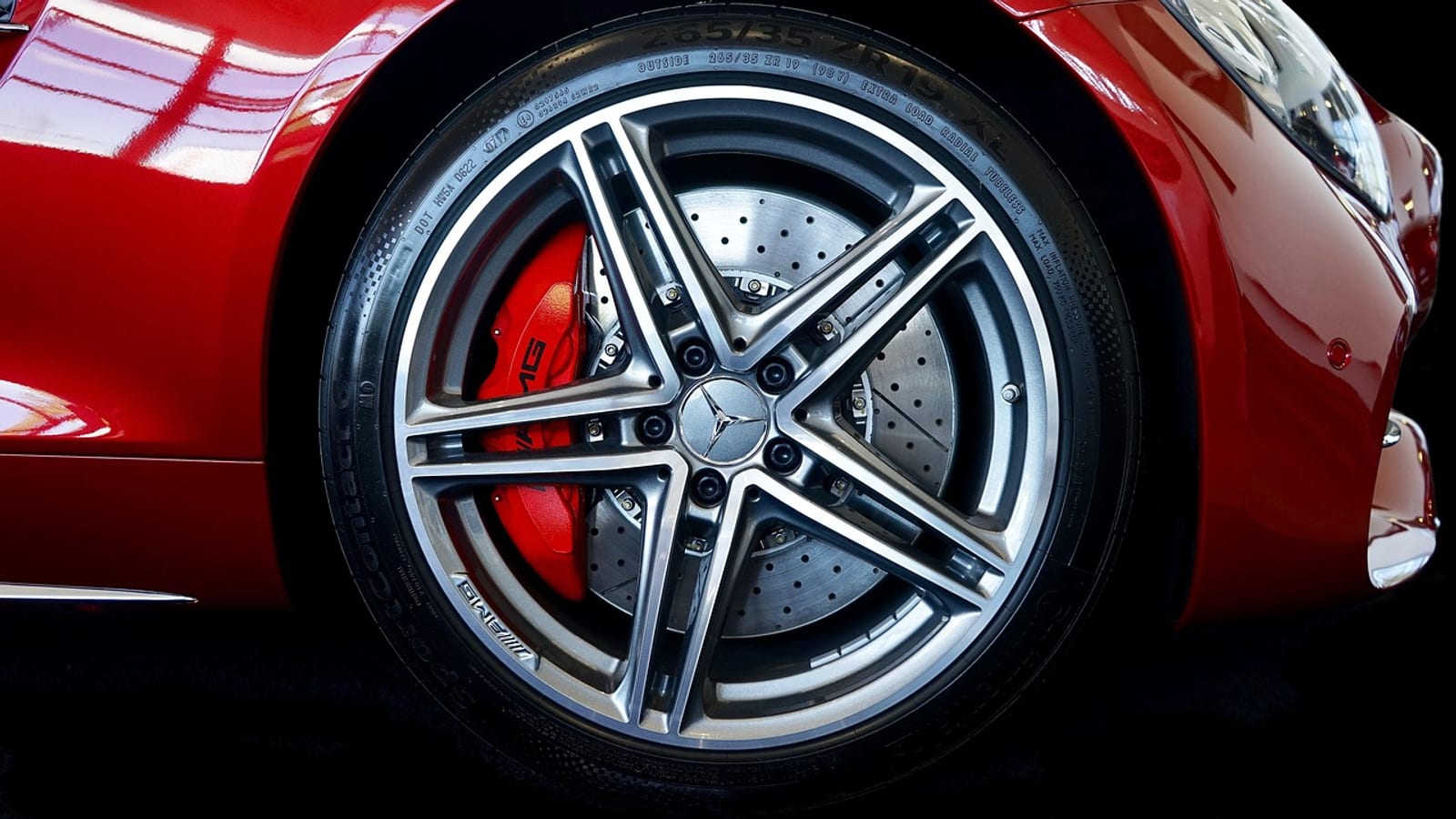
A friction brake that is rarely used does not stay pristine. Discs with a film of rust on them clean up when the pads press against them under load, but a car that slows almost entirely on the motor never gives them that work. The result is pitting, a lip on the edge of the disc, and eventually a brake that is rough or weak at the moment you need it.
That is a predictable outcome rather than bad luck, and it is the price of a system that is very good at avoiding its own friction parts. The remedy is deliberate use: a firm stop from a sensible speed on a clear road, now and then, keeps the friction path exercised. Some cars schedule that themselves, applying the friction brakes quietly to keep the discs clean.
It is worth remembering what the friction brakes are for. They are not a legacy part waiting to be deleted. They are the guarantee that stopping does not depend on the pack’s mood or the motor’s speed, and a car that treats them as decoration is storing up a problem for the person who buys it secondhand.
Advertisement
Two electric cars feel different because of choices
One-pedal driving is a calibration and policy choice, not a requirement of electric drive. A car can creep like an automatic when you release the pedal, or hold itself still at a junction until you touch the accelerator. Both are legitimate designs, and neither is more electric than the other.
Brake lights are the same story seen from behind. Deceleration strong enough must show stop lamps, and regulators set the threshold at which that becomes mandatory. Lift off in a car with strong regen and you may be slowing noticeably without crossing it, which is why one car lights up when you release the pedal and another stays dark.
So the test drive question is not whether a one-pedal mode exists. It is whether the pedal tells you the truth at low speed, in the wet, with a full battery, and on a cold morning when the pack will not take much charge. Those are the conditions where blending is hardest, and where a calibration decision turns into something you feel on every trip.