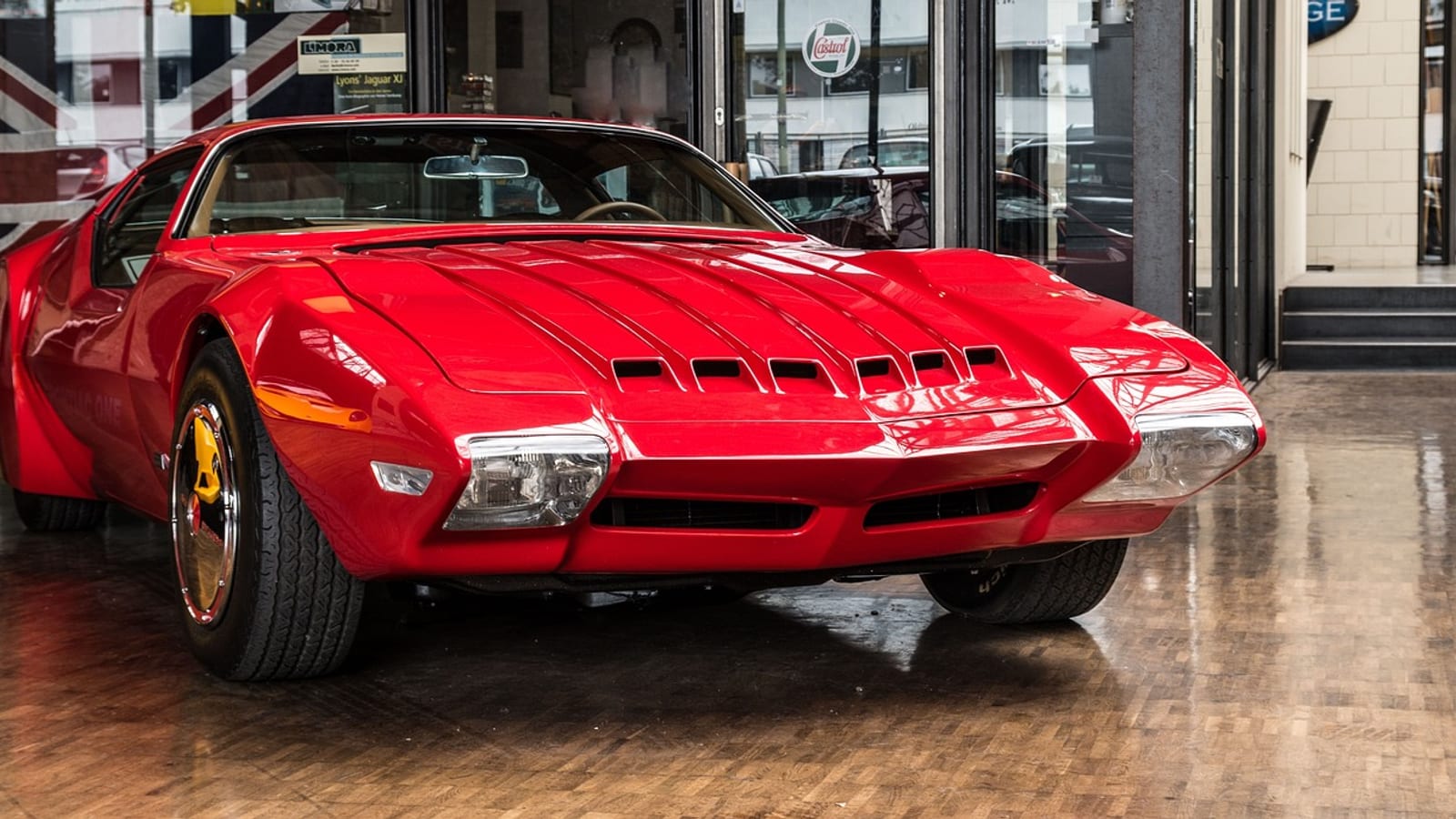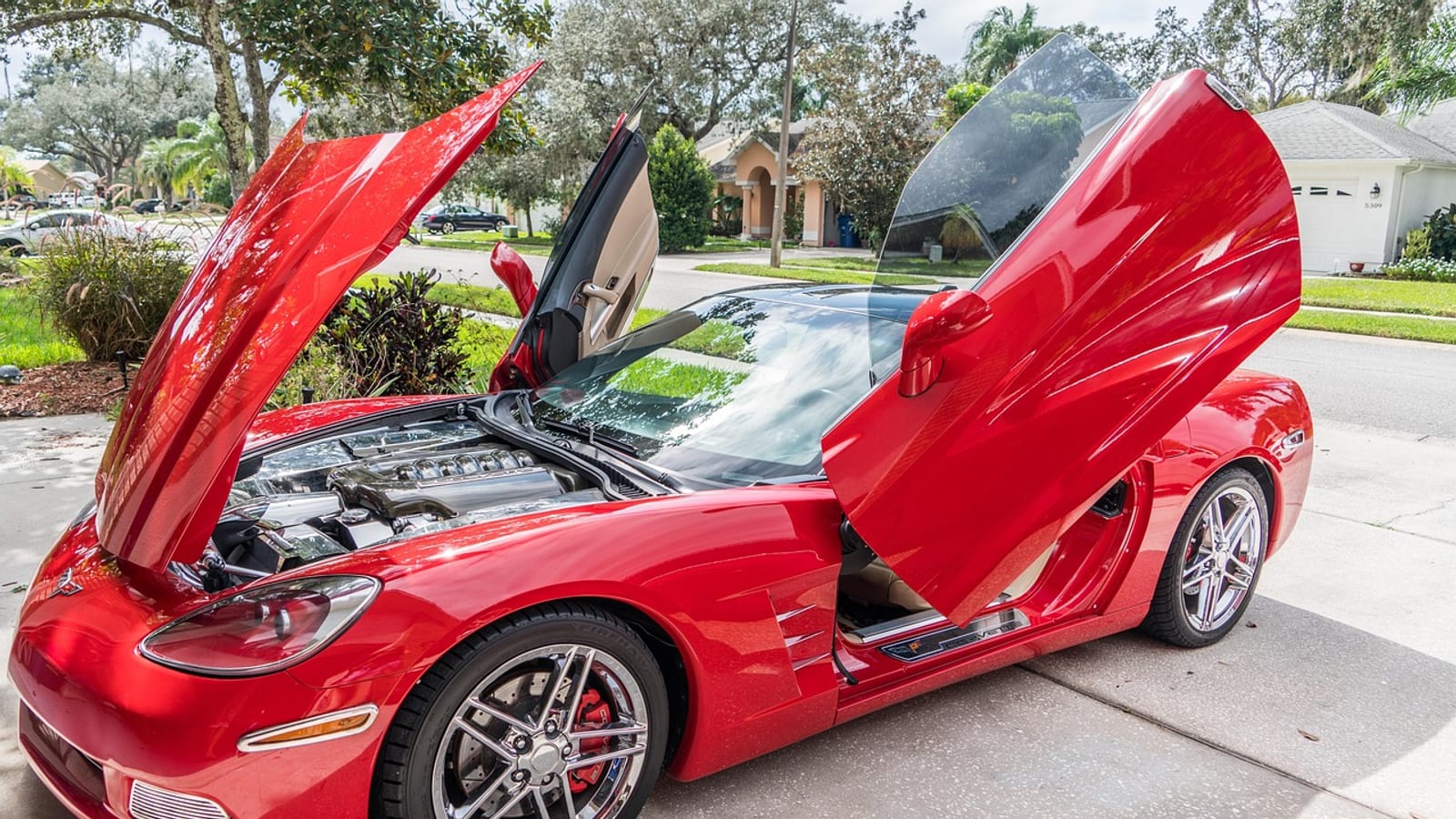
Walk past a concept car at a motor show and one detail gives the game away. Run a finger along the shut line of the door — the gap between panel and body — and you’ll often find it’s a groove moulded into a single skin, not a gap between two parts. The handle may be a shape in the surface. On a lot of show cars, nothing on that side of the vehicle has ever opened.
A show car is a shape before it is a car
Show stands are full of vehicles that were never meant to be driven onto them. Some display cars are pushmobiles: no drivetrain, sometimes no floor structure worth the name, rolled or lifted into place by handlers. Others are running prototypes, but even then the show car is often a single example, hand-built over a rig rather than assembled on a line.
A production car spreads the cost of engineering a door across however many units get built. A one-off spreads it across one. The door, its hinges, its latch, its seal and its glass have to be designed, made and fitted for a car that will spend its life under lights.
The design language usually works against the engineers. Concept sketches are drawn to look uninterrupted. Flush surfaces, hidden handles, thin gaps and glass that appears to float are all easier to draw than to build, and each one removes somewhere to hide the parts that make a door work.
A production door has to do four jobs at once
A door isn’t a panel that swings. It’s a small system with four jobs that have to happen simultaneously.
It has to seal. Weather seals keep water out of the cabin and out of the door’s own cavity, which means drain paths, a seal that compresses evenly around the aperture, and a shape that doesn’t hold water against bare metal.
It has to latch. A latch has to hold under load, release when asked, and do both reliably for the life of the car, including in a crash. Hinges, latches and glass bonding are regulated components in major markets, tested against standards rather than judged by eye.
It has to carry load. The door is part of the body’s structure at its mounting points, and it has to keep its shape when the body flexes. A door that sags on its hinges stops sealing, and a door that doesn’t seal becomes a warranty claim.
It has to hold glass. Side glass runs in channels, moves on a regulator and meets a seal at the top. Where glass is bonded rather than slid, the joint is structural: a bonded screen adds stiffness to the opening it sits in.
Advertisement
Every one of those jobs becomes a bespoke part on a one-off
On a production program, a seal is a profile extruded by the kilometre and a hinge is a casting made in a die that pays for itself over tens of thousands of cycles. On a concept, the same seal is a length of profile bought or made for one car, and the hinge is a machined or fabricated one-off, fitted by hand.
That’s the cost multiplier nobody sees on the stand. It isn’t the price of the parts. It’s the number of iterations each part needs before it works, with no second car to prove it on.
Structure is the harder problem. A door aperture is a hole in a load path, and the body has to be stiff enough around that hole that the door still fits when the car sits on uneven ground. A concept body is often hand-built on a rig, so the aperture is whatever the fabricator achieved. Fitting a working door to it means measuring that particular hole and building that particular door around it.
Production solves this with fixtures, gauges and a tolerance budget agreed years in advance. A one-off solves it with a file.
Advertisement
The tell is in the gap, the rubber and the glass
You can usually work out how seriously a show car’s doors were engineered before anyone opens their mouth.
Look at the shut line. A real door leaves a gap of consistent width with a visible break between two panels, following a path a seal can live in. A styling buck has a groove that tends to shallow out or stop where the surface curves away.
Look for rubber. A working door needs a seal, and a seal is visible when the door is open. If there’s no rubber anywhere on the aperture, the door isn’t sealing anything.
Look at the glass. If the side window is one continuous surface blended into the windscreen and the rear, there’s no room for a channel, a regulator or a division bar.
Then look at the whole car. Vehicles built to be looked at often sit low, with wheels turned to a set angle and suspension set for a photograph. That isn’t dishonesty; it’s the job. The thing on the stand is a sculpture with a lighting plan.
A door that opens is a hole in the sculpture, and every hole has to be sealed, hinged and paid for.
None of this makes the design fake. It means the show car is answering a different question from the one a buyer will ask. The stand is asking whether you’ll stop walking. The production car has to answer whether the door still shuts after a decade of being slammed, in rain, with a child leaning on it.