Every auto show produces at least one car that will never exist. It has no door handles, a glass roof that cannot pass a rollover test, and an interior the colour of a wet stone. Journalists write it up as a preview of the future. Six years later, nothing resembling it is on sale, and readers conclude they were lied to.
They were not lied to, exactly. They were shown a document in a format they were not meant to read.
A concept car is a sales tool, but rarely a sales tool aimed at the public. It is built to move a specific decision inside a company that is otherwise very good at not making decisions. Understanding which decision a given show car is trying to move tells you far more about the future product plan than the press release does.
The three kinds of concept
Almost every show car is one of three things, and the three carry wildly different amounts of commitment.
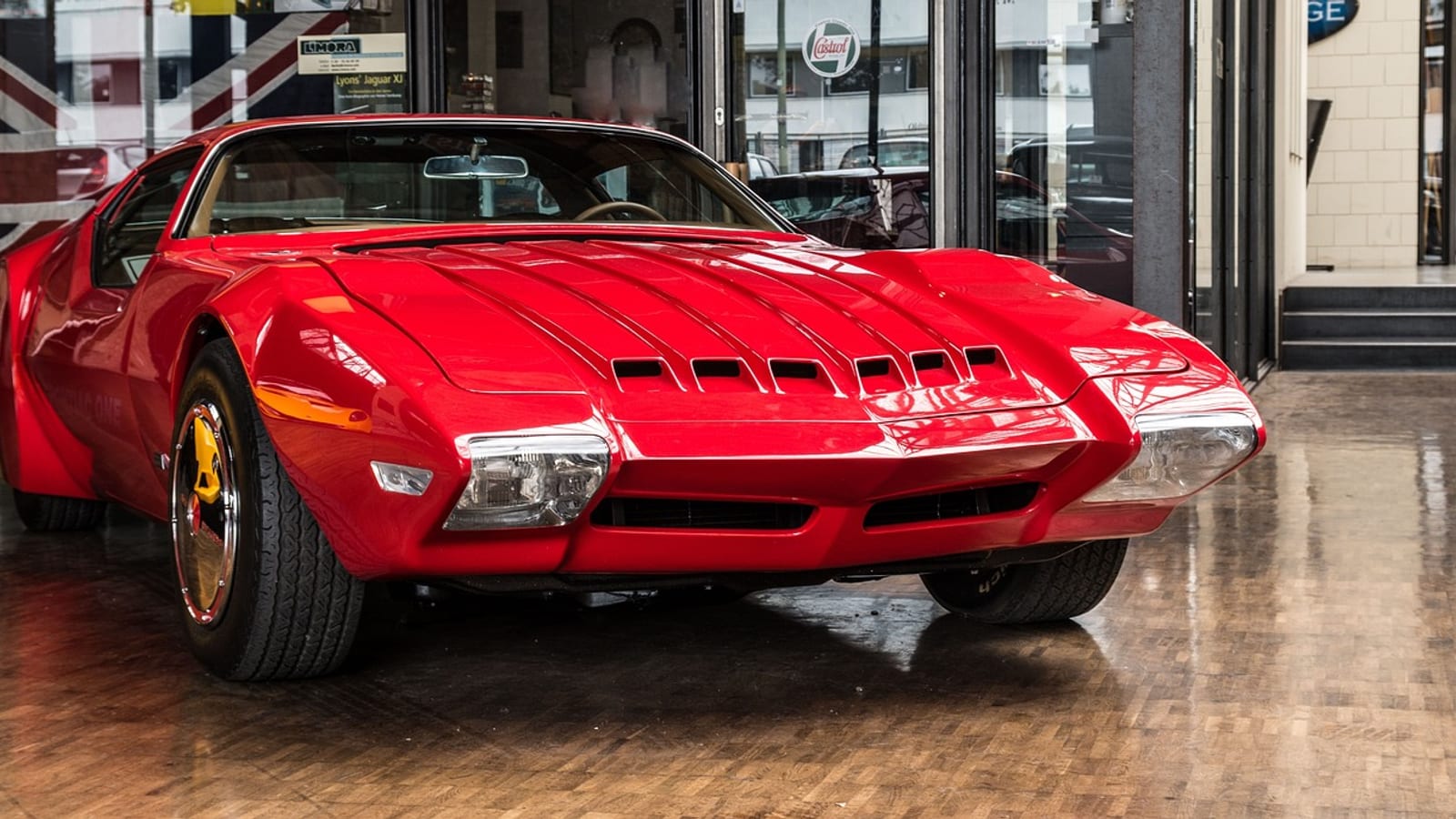
A design study explores a formal idea — a proportion, a surface language, a face. It is the least committal kind, and the most common. Its job is to test whether a direction reads well at full scale and in photographs, and to give a design team something to argue about. Nothing about a design study implies a program.
A production preview is a car with a launch date behind it, wearing show-car clothes. The hard points are real, the package is real, and the body is close to final. Automakers show these when the program is already funded and they want to start building an order book. The tell is specificity: real wheel sizes, a production-grade interior, and a press pack that mentions a platform.
A technology demonstrator exists to prove a subsystem — a battery architecture, a thermal strategy, a manufacturing method — in a package exciting enough to get on a stand. The body is often a costume over a test mule. Engineers like these because they can show a supplier or a board something physical without committing a nameplate.
The mistake readers make is treating all three as forecasts. Only the second one is a forecast. The other two are research.
Why the clay model still exists
Design studios have been digital for decades, yet almost every serious surface decision still ends up on a full-size clay. The reason is not nostalgia. A screen compresses and flattens; a surface that looks confident at 1:5 can look nervous at 1:1, and the human eye is extremely good at catching that nervousness in person and extremely bad at catching it in a render.
The practical workflow is now digital-first: sketch, scan, model, mill a full-size form from foam or clay, then rework it by hand. The milled buck is a physical draft. Designers shave and add material until the reflections run cleanly, then the surface is scanned back into CAD. The clay is a review instrument, not a prototype.
This matters for reading concepts because it explains why proportions are usually honest and details are usually not. A studio can afford to get the stance and the shoulder line right, because those are the things being reviewed. It cannot afford to engineer a production door hinge for a car that will be crushed in eight weeks.
Advertisement
The gap between the show floor and the showroom
The distance between a concept and a production car is mostly regulation, cost, and packaging — three subjects that make for terrible photography.
Take glazing. A show car often runs a single deep windshield and side glass with no pillar visible, because the pillar would interrupt the design. Production cars need a structure that meets roof-crush and side-impact requirements, which means an A-pillar with real section, a B-pillar where the beltline meets it, and glass that can actually be bonded and sealed.
Then lighting. A concept’s lamps are usually unlit jewellery. Series production lamps must meet photometric standards for beam pattern, glare, and durability, which is why production cars have larger, deeper lamp units than the sketch suggested.
Then the small stuff: bumper height and geometry, license plate recesses, wipers that park out of the airstream, mirrors wide enough to satisfy field-of-view rules, door handles that a gloved hand can operate, wheel wells deep enough to clear a loaded suspension, and a tyre spec that exists in a catalogue.
The boring parts are the tell. If a concept has a plate recess and a wiper, someone is already thinking about the homologation file.
Interiors are the biggest tell of all. A trimmed interior — real seat frames, a dashboard with a plausible knee bolster, a screen at a reachable angle — costs real money and signals a car that will be built. A foam sculpture with a single sculpted seat and no pedals is a mood, not a model.
The concept as a business case
Here is the part that rarely makes the press release: a concept is often commissioned to win an internal argument about capital.
Vehicle programs are approved in stages, and each stage has a gate where a committee can kill the program or fund the next tranche. A physical car is an unusually effective artefact in those rooms. It converts a slide about “white space in the C-segment” into something a CFO can walk around. Design directors use concepts to protect a proportion before cost engineering starts removing it.
That is also why concepts appear in clusters. When a company is deciding whether to spend on a new platform, several concepts tend to surface at once — each one a bid for the same pool of money.
The cost of a show car is trivial next to the cost of a wrong program. A concept that costs a few million and kills a bad idea has paid for itself many times over. The public sees marketing; the company sees a cheap option on a large decision.
Advertisement
How to read a concept in thirty seconds
A short checklist, in rough order of usefulness:
- Door cut lines. If the shut lines are in production-plausible places, the body is closer to reality than the surface suggests.
- Pillars and greenhouse. A visible A-pillar with section, and a B-pillar where you would expect one, imply structure.
- Wipers and plate recess. Presence means someone has started the homologation conversation.
- Wheel and tyre spec. A tyre with a size you could order is a strong signal; a one-off milled wheel with a fictional tyre is not.
- Interior completeness. Pedals, a seat frame, a working screen, and a dashboard that could absorb an airbag.
- Where the cameras are. Concepts are styled for the press photo angle. Walk around one and look at the rear three-quarter and the roof; that is where honesty shows.
What concepts are bad at
Two things, consistently.
The first is timing. A concept compresses a decade into an afternoon, so readers assume the car is imminent. Programs run on four-to-six-year cycles from approval to showroom, and a design study shown this year may inform a car that arrives in 2032 — or none at all.
The second is price. Show cars are built without a bill of materials in the ordinary sense, so the surface language they propose often costs more to manufacture than the segment can carry. That is precisely the argument cost engineering wins later, and precisely why production cars look calmer than the concepts that preceded them.
So the useful question is not “will they build it”. It is “what argument is this making, and to whom”. A car with a plate recess is arguing with a finance committee. A car with a glass floor is arguing with a design director. Both are doing their job. Only one of them is about you.