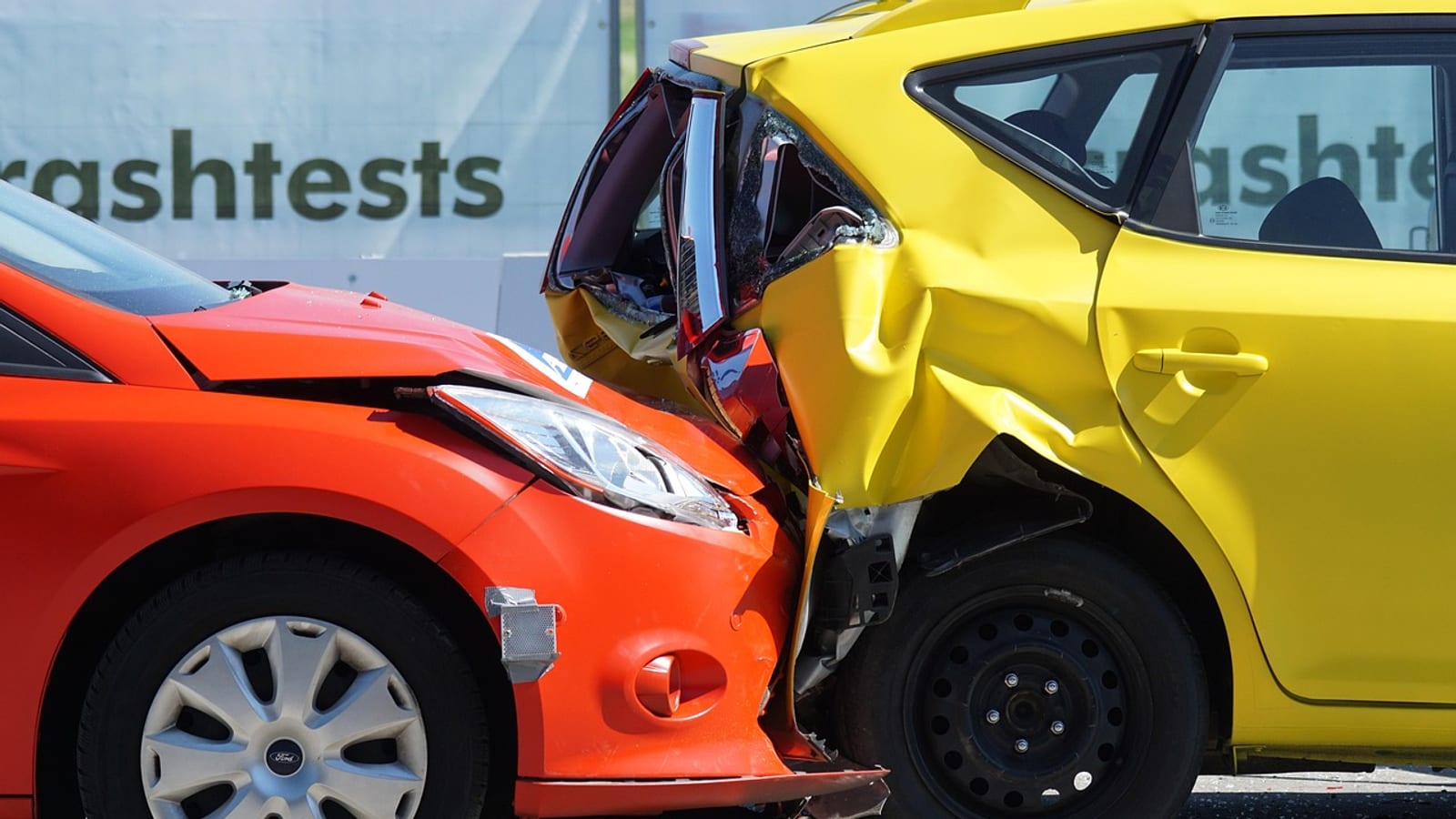
A car can pass every legal safety requirement in the market that sells it and still collect a mediocre score from a consumer testing programme. That isn’t a contradiction and it isn’t a scandal. The two are measuring different things on the same car, for different audiences, and neither one is describing the crash you’ll actually have.
A legal pass and a star rating are separate systems
The United States largely self-certifies against the Federal Motor Vehicle Safety Standards. The manufacturer tests and declares that its vehicle complies; the regulator audits that work and can compel a recall when a vehicle turns out not to meet the standard it was certified against.
The legal standard is a minimum. It says a vehicle has to perform to a defined level, and it doesn’t rank vehicles against each other or produce a score. A consumer programme starts from a different premise: test a sample of cars the same way and publish how they compare. One is a gate. The other is a league table, and a league table can contain a low scorer without anyone having broken a rule.
Consumer programmes such as NCAP tests publish star ratings that are separate from legal compliance. A car can be entirely legal and score poorly, because the rating is a comparison rather than a check against a floor.
The dummy is a measuring instrument, not a stand-in for you
Tests use instrumented anthropomorphic test devices, or dummies, rather than human bodies. The dummy is a sensor package in a human shape. It records acceleration, force and deflection at specific points, and those readings are converted into injury criteria by a formula fixed in advance.
Crash testing is therefore proxy measurement. Nobody is measuring safety directly. They’re measuring how a device behaves in a staged event and inferring risk from that, which is a reasonable thing to do and the only ethical way to do it at volume. Every rating inherits the assumptions built into the device and into the criteria.
This is the part buyers skip. A dummy isn’t calibrated to feel pain; it’s calibrated to produce numbers that correlate with injury risk across a population. Its dimensions and mass represent an average, so a car that protects the average occupant well may protect a much smaller or much larger one less well. The rating doesn’t say so, because the rating is about the device.
Advertisement
The barrier choice decides which structure gets tested
Barrier geometry and impact speed are fixed by the test protocol. That’s what makes results comparable across cars and across years, and it’s also what limits them. A full-width rigid barrier and an offset deformable barrier load the structure very differently. The rigid barrier spreads the load across the whole front. The offset barrier concentrates it on part of the front and forces one side to absorb far more.
So a car can be strong in one and weak in the other. The structure that survives a full-width hit isn’t necessarily the structure that manages an offset hit, because the load paths are different and the two tests reward different things. Neither test is wrong. Each answers a specific question, and the question was chosen by the protocol rather than by the collision you might have.
Ratings weight injury criteria by the programme’s own scheme
Ratings weight the measured injury criteria according to the programme’s own scheme. That’s legitimate, and it’s also a choice. Different programmes weight different body regions differently, include different tests and set different thresholds for the same rating. A star is a summary of a scoring system, not a physical quantity.
Which means a rating is only comparable within its own programme. Cross-shopping scores from different systems is like comparing two exam results marked by different examiners against different syllabuses. The number is real. The comparison isn’t.
Advertisement
What a star rating doesn’t cover
A star rating doesn’t cover compatibility. Two vehicles that each protect their own occupants well can produce a worse outcome when they meet, because mass and stiffness decide how the energy is shared between them. A rating for a single car, tested against a barrier, can’t tell you what happens when that car meets something much heavier.
It doesn’t cover the speeds and angles that don’t appear in the protocol either. Tests are run at fixed speeds because fixed speeds are repeatable, and repeatability is what makes a comparison fair. Real crashes happen at whatever speed they happen at, so the structure that performs well in the protocol is being asked to do a job it wasn’t measured for.
A test is a question asked in advance. The crash you have is the question nobody chose.
Restraint use is the last gap. The dummy is belted and positioned as the protocol requires, because otherwise its readings mean nothing. If an occupant isn’t belted, or isn’t sitting where the protocol puts the device, the readings that produced the rating describe a situation that isn’t happening. That’s not a flaw in the test. It’s the boundary of what a test can say.
None of this argues that ratings are useless. It argues that a rating is a compressed answer to a narrow question, and treating it as a verdict on a car’s safety in general asks it to do something it was never built to do. The useful reading is narrower and more informative: what was tested, against what, at what speed, and with whom in the seat.